Sunday, 16 February 2020

Chimpanzees in Kibale NP

Hey Guys!
We had a fantastic weekend getaway to Kibale NP. Here we got to do some chimpanzee tracking, and we also had a great walk through the Bigodi swamp. Let's dive right in! 
We saw this guy within 20 minutes of being in the forest. He was moving pretty slow, which our guide told us was normal because they are usually a bit cold in the mornings. 
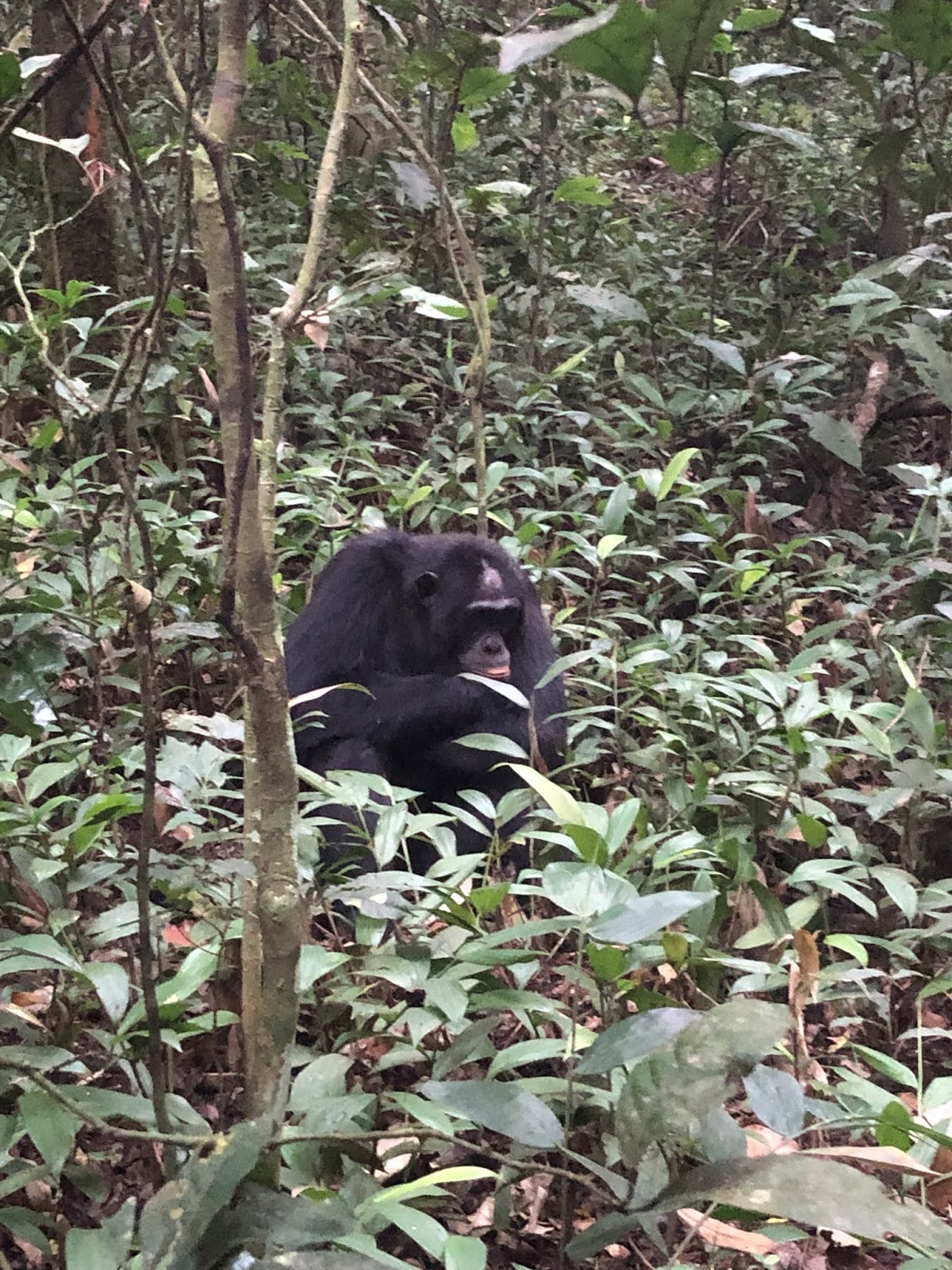
This guy looked really sad, but I guess I get sad when I am cold. 
Hey, it's me with a chimp!
I liked how uninterested they were in our presence. They went about their daily business, sometimes walking by a tourist like they weren't even there. 
What was really interesting was when they decided to vocalize to each other. There would be an eruption of screams/calls and then it would all die down to nothing again. They also use the buttress roots of the fig trees to communicate with each other. They bang really hard on the tree and it makes a huge noise. It was kind of scary to think how powerful they are, but they are really gentle creatures.

Here was our guide for the day, he led us on a wild romp through the jungle. We were climbing for quite a while, with branches whacking us in the face. I felt kind of bad for the older people on the tour.  
There are lots of other primates in the park, like Vervet, Colobus, Mangabey and red-tailed monkeys. 

Dung beetle
This was on the ride back to town, we saw a troupe of baboons on the roadside. How incredibly cute is this little baby? 
While we are on the topic of cuteness, this is Ekigyere, and she was the cat that lived at the homestay we visited. It means foot in the local language, because she was always at your feet. We got along just great. Don't worry Nmorange, momma loves you the best. 

The next morning we took a tour of the Bigodi swamp, and saw all sorts of birds and monkeys. Our guide (pictured), was amazing with birds. He could hear them call from a while away, and knew exactly where to look for them to show us. 
We saw hornbills, turacos, harriers, weavers, berbet, and a rare robin he only sees once every 4 months. What was really awesome was the shining blue Kingfisher, which was really lucky that we got a glimpse of it. 
Photo credit to Jonathon Roussouw from the internet. I wanted you to see an actually good picture of this bird so you could know why I was so excited to see one. 
We were totally immersed in the verdant excess of the swamp, there was vegetation everywhere. 
Here is a black and white colobus monkey. 
Swamp lily
All of these little balls are weaver's nests. At one point in the tour, we saw a harrier come by and start destroying these nests, trying to eat the eggs inside!


Red-tailed monkey
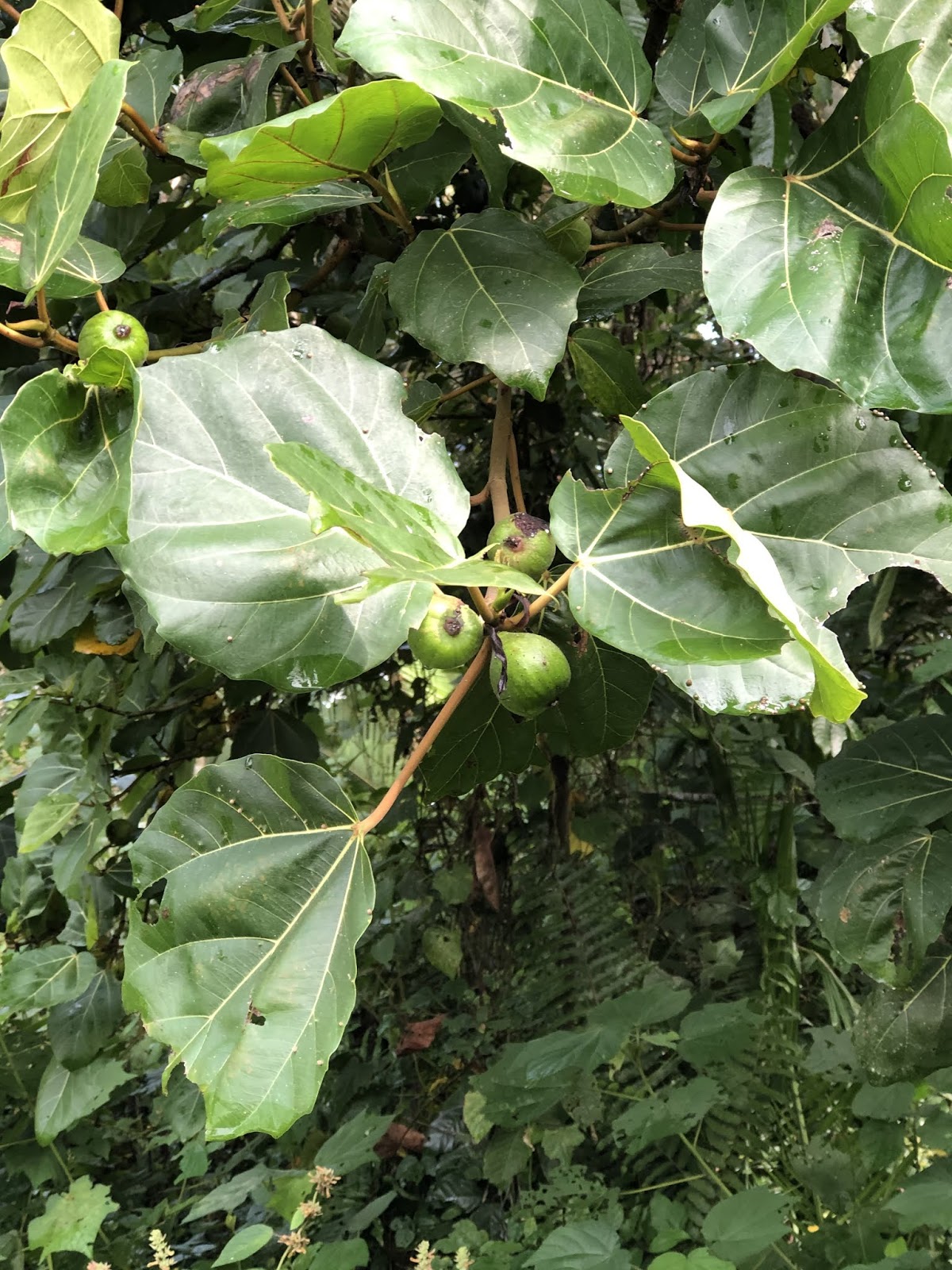
Coffee robusta, which is different from the other main type of coffee: Coffee arabica.
Grey-cheeked Mangabey
It was a beautiful morning of wildlife, we were sad to say good-bye to this beautiful corner of Uganda. 
Until Next Time! 


Friday, 14 February 2020

A bit more VWB

Hey Guys!
We are seeing and doing so much with VWB, that we have to just keep writing blogs about it. Our time is winding down with this organization, but we are so grateful to have been able to come to Uganda and have this experience. 
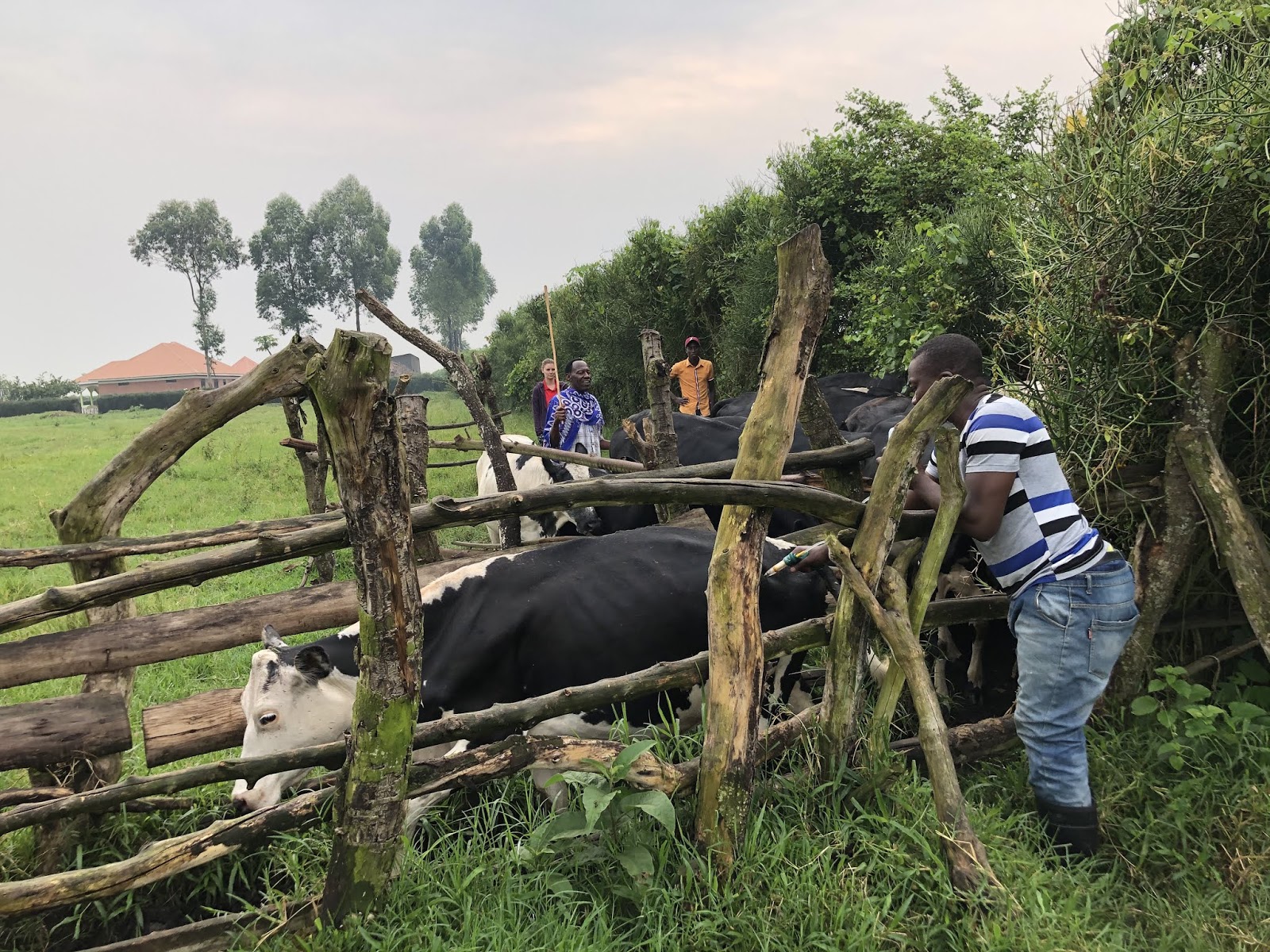
What the Ugandans lacked in handling facilities they more than made up for in hospitality. Here we are vaccinating for lumpy skin disease. 
After most calls we would be invited in to 'please take something.' Here I am drinking milk tea and eating bananas, something I did a heck of a lot of. The milk was always from the farm, and usually the bananas were from their plantation as well. 
Of course we did more drenching this week, were you thinking that was over? 
Right after our weekend in Bunyoni, we gave a producer talk to the 20 farmers in the Rushenyi cooperative. These farmers have formed a co-operative to help support each other. They have meetings to share knowledge, provide small business loans to members, and they collectively employ a veterinarian (Kwesiga). 
At the producer talk, Jared or I would make one of our points and Kwesiga would translate it into Runyankole. We talked about brucellosis, pasture management, tick control, mastitis and record-keeping. It was a pretty interesting experience, because we learned a lot about the impact of our talk after the fact. We couldn't understand a lot of the farmer's reactions, but apparently we had stimulated a lot of discussion about brucellosis. Many farmers did not know it was zoonotic, and when we explained how people can get it from drinking milk and eating meat from infected cattle, we really drove home the importance of trying to control and eventually eradicate it. 
We spent the week visiting the beautiful Ugandan countryside. We are still seeing emergency cases, doing afternoon rounds and teaching Kwesiga to palpate. 

At the end of this week, we traveled to Mbarara to demonstrate an epididymectomy surgery at one of the training farms. This is also known as a 'teaser bull surgery.' The goal is for one of the trainers to gain this skill, and then teaser bulls could be sold in the area to local farmers that are trying to improve their heat detection.  A sexually intact male bull is one of the best ways to detect a cow in heat, so this is why just the epididymides are removed. The bull will still have testicles and the testosterone that comes with them, and will still search for cows in heat. Without epididymides, the plumbing for sperm is simply interrupted, so he can't get anything pregnant. In order to advance the herd genetically, the cows will instead be impregnated with artificial insemination.
We started with some classroom work to review the anatomy and the surgical procedure. 
We had castrated some bulls the day before, so we brought the specimens for the students to get some hands-on experience before the real thing. 
Before we began the procedure on the live bull, Jared demonstrated how to give an epidural. This would only anesthetize the caudal 1/3 of the scrotum, so we topped it up with more local anesthetic into the ventral area of the testicles and scrotum. 
There is actually a bovine in the center of that circle. We had about 12 people watching the surgery, the more the merrier. 
Moving on to the second side after the first was sutured up. 
We had a great day, it was great to see how enthusiastic everyone was to learn a new skill. They also told us they would name the bull 'Jared' after this, as a memento. I guess it is better than being named after a steer?........ 
Here are some pictures of Rubaare town, where we were based out of. On the right is the vet pharmacy where we got a lot of the vaccines and dewormers that we used daily. One of the challenges we faced was availability of medications. There are so many things you either can't get here, or they are known to be so counterfeit that it isn't worth buying them. 
Another issue is the fact that farmers can walk in and buy pretty much anything. Without a veterinarian in the equation, animals are commonly mistreated with the wrong medications. If it was an antibiotic, that contributes to antibiotic resistance. The same goes for inappropriate use of tick controls (acaricides) and dewormers (anthelmintics). 
Our lunch spot that we went to most week days 
Pictures of the market, which was every Wednesday. It was a super chaotic place. They even sold cattle here in a soccer field, and they were all loose and running around. Madness. 

We are getting the full experience out here. Some things are super motivating, others are downright depressing. I am very grateful to be able to experience this all first hand. 

Until Next Time! 

Monday, 10 February 2020

A relaxing weekend on Lake Bunyoni

Hey Guys!
So the last blog was maybe a little heavy and 'vetty' for a few of you, so here's a soft ball coming your way. Our weeks are full of amazing cases, people and experiences. They are busy and rewarding, but at the end of all that hot and sweaty work, some chill time at the lake is in order. One weekend we headed out to Lake Bunyoni, just outside Kabale town. We took a small boat out to Itambira island (which means place of blessing in the local language). 

This was the place we ended up with, and it was so totally awesome. There was no front door, which was a little hilarious, but it looked out on the lake and there was hardly anyone around. 
Here is a view of the room from the inside. 
It was such a tranquil and beautiful place
'Bunyoni' means the place of many little birds in the local language, and we spent a great afternoon watching the birds go by, looking them up in the book: Birds of East Africa 
Our bird watching balcony, where we also had some meals 
Lake Bunyoni is hippo, crocodile and bilharzia free, so I took advantage and went for a swim on our own private swimming dock. 
Here is a pied Kingfisher, also making use of our dock. 
The next morning we were served breakfast on our balcony, it was so lovely to sip tea and listen to the birds. 
We ended the weekend feeling refreshed and ready for another week, whatever it may bring. 

Until Next Time!